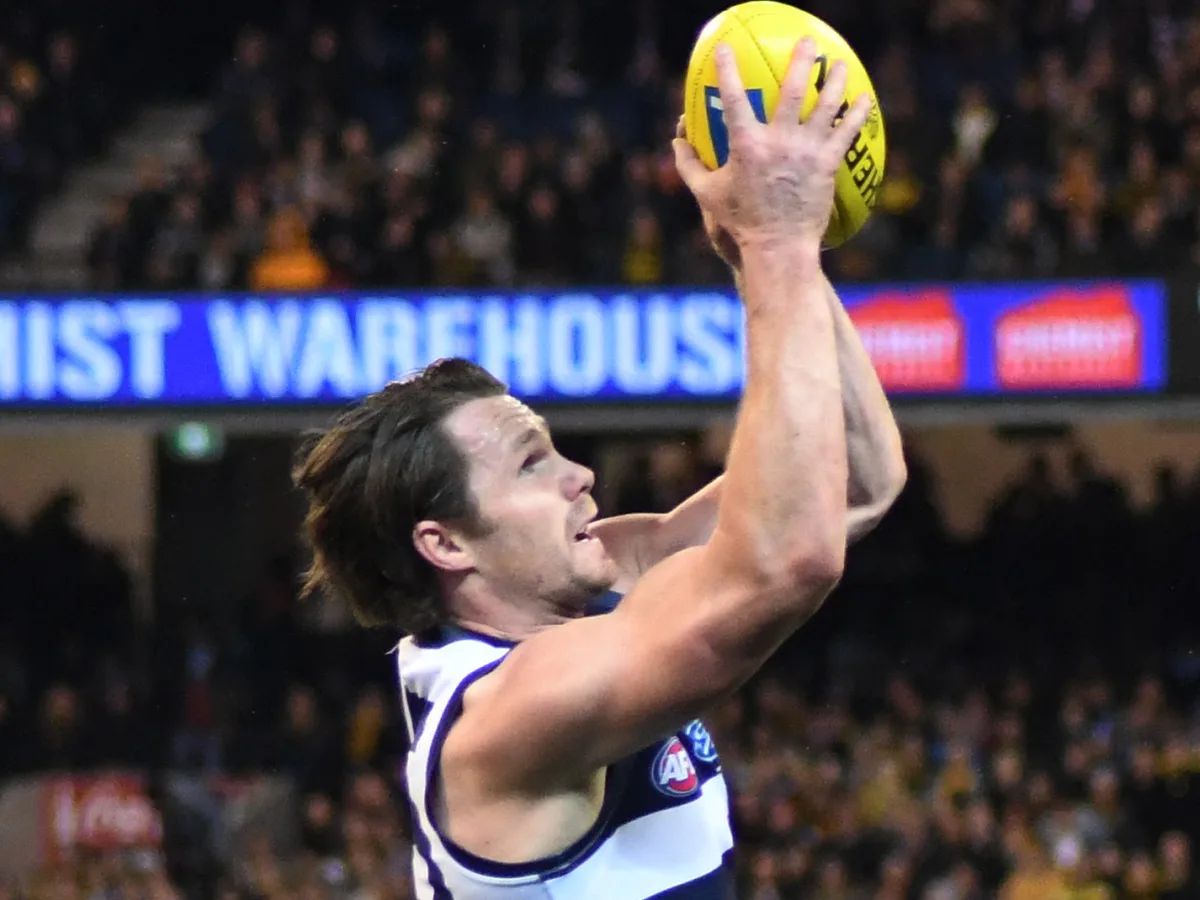
Header photo: Patrick Dangerfield marking for Geelong against Richmond at the MCG, August 2018. Photo by Flickerd via Wikimedia Commons, CC BY-SA 4.0, cropped.
On 4 September 2026, Patrick Dangerfield kicked five goals in an AFL Elimination Final at 36 years and 152 days old. According to a statistic published by the AFL and compiled by the statistician known as Swamp, no older player has kicked five or more goals in a V/AFL final. The previous mark had stood since Gordon Coventry in 1937.
Asked about his captain afterwards, Geelong teammate Mark Blicavs told ABC Sport: “He just makes a contest and gets up so quickly … He really times his efforts. He makes sure when he’s going, he’s going in 100%. He’s still as dangerous as ever.” Blicavs knows something about longevity himself. That night was his 30th final, in his 14th season.
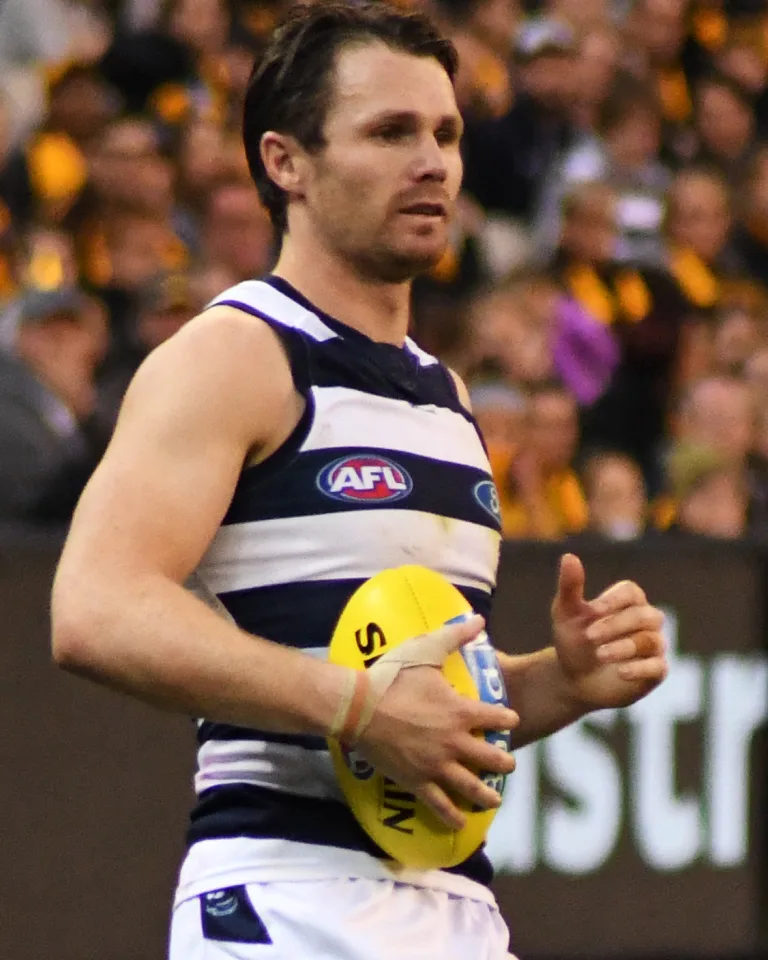
Our director, Dr Steve Saunders, consults on science and medicine to the Geelong Football Club, so a night like that lands close to home. It also raises a question we hear every week in the clinic: what does it take to stay dangerous as you age, and what does that mean for the runners, netballers, footballers and golfers we see every day?
Age Is a Risk Factor. It Is Not a Sentence.
Let’s start honestly: age matters. A 2020 meta-analysis of hamstring injury risk in sport found that older age and a previous injury were among the factors most consistently linked with a new injury (Green et al., BJSM 2020). Tissues change, recovery slows, and old injuries leave a mark.
But much of what we call “ageing” is really relative disuse. When researchers scanned the thighs of masters athletes aged 40 to 81 who trained four or five times a week, they found muscle size and strength largely preserved across the decades, with little of the fat infiltration usually seen in older muscle (Wroblewski et al., The Physician and Sportsmedicine 2011). Physiologists now use master athletes as the model of what ageing looks like once inactivity is taken out of the picture (Lazarus & Harridge, Journal of Physiology 2017). It is never too late to start: a meta-analysis of resistance training in adults over 50 found substantial strength gains, with harder training producing bigger gains (Peterson et al., Ageing Research Reviews 2010). Moreover, changes in other tissues, such as tendons, are also modifiable: preventable or reversible. In adults in their seventies, 14 weeks of strength training increased tendon stiffness by 65% (Reeves et al., Journal of Physiology 2003).
So, while the decline seen in muscle and tendon tissue is real, the changes and the rate of decline of tissue function are negotiable.
“We have an opportunity to target tissues at risk in each athlete. To be more specific about how we condition them. To continue to see improvement in aspects of their performance beyond the ages previously understood to be barriers.”
— Dr Steve Saunders
Here is how elite programs negotiate it, and how you can too.
Lesson 1: Measure. Don’t Guess.
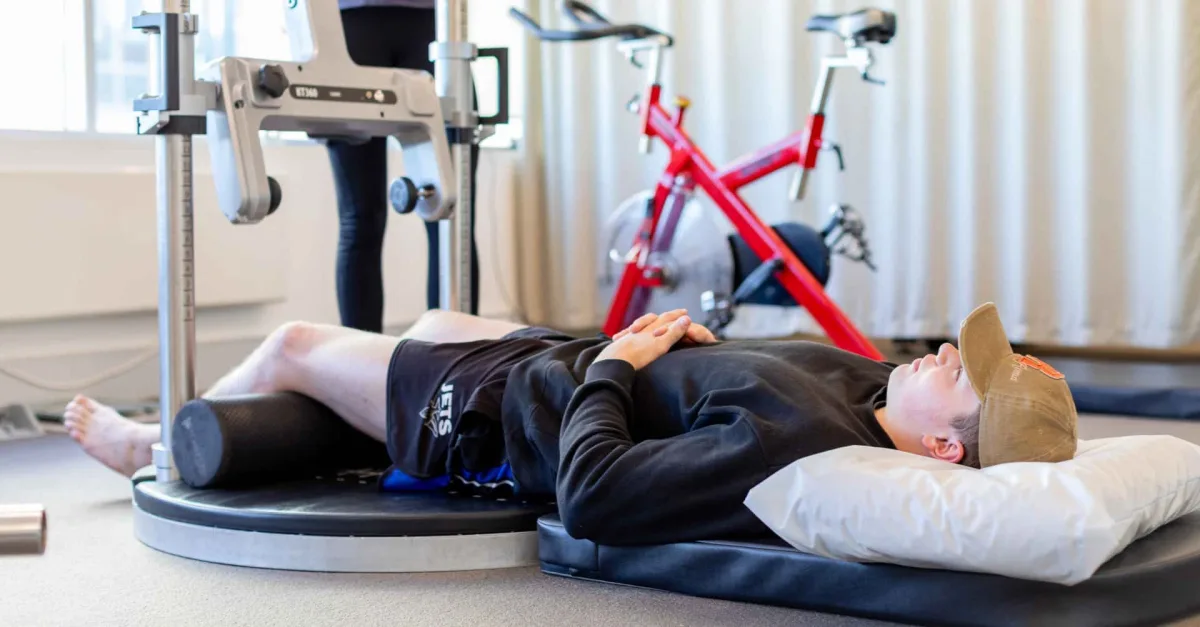
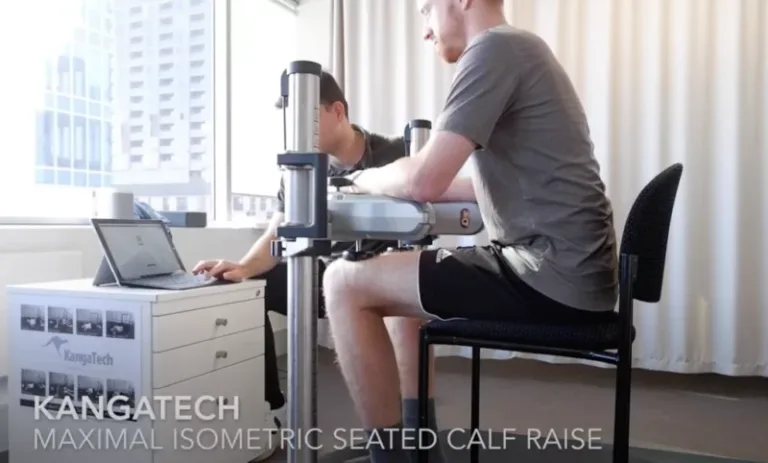
Elite clubs do not guess whether a player is strong enough to play. They test. Fixed-frame strength testing of the kind Steve pioneered with KangaTech gives repeatable numbers for the most commonly injured muscle groups (hamstrings, hip adductors, quads and calves). A study in elite AFL players confirmed that these measurements are reliable enough to track over time (Ransom, Saunders et al., Journal of Science and Medicine in Sport 2020).
Why does that matter at 45? Because a strength deficit is invisible until it isn’t. A left hamstring 15% weaker than the right feels fine right up until the sprint for the tram or the late-season netball final. We run the same KangaTech strength assessment for everyday patients, and we re-test to show the change, not just talk about it.
Lesson 2: Time Your Efforts.
Blicavs’ line about timing efforts is, in physiotherapy language, considered through load management. The best-known paper on the subject is titled “the training-injury prevention paradox” (Gabbett, BJSM 2016). Its finding surprises people: athletes who train consistently at high loads tend to be more robust, not more fragile. Injuries often cluster when load spikes suddenly compared with what the body has been doing over the previous weeks.
For a weekend athlete, the spike is the enemy: three months off and then a full game, a running plan that jumps from 10 km a week to 30, a January boot camp after a December on the couch. The fix is not to do less. It is to build gradually, in two ways. First, build a strength reserve in the target or commonly injured tissue, in a way that protects it against these load fluctuations. Second, maintain training loads with adequate recovery, to provide a constant stimulus to the tissue while allowing it to adapt and repair. For many, this means training smart through the off-season. Treat consistency as the goal and target the modifiable risk factors for injury. Dangerfield does not save his best for September by resting until September. He prepares aggressively.
Lesson 3: Train the Tissue That Fails.
Hamstrings are the classic sprinting injury and the one that ages least gracefully. While they are a multifactorial problem in many cases, the evidence on what to do about them is usually clear when risk factors are profiled or measured.
Including the Nordic hamstring exercise in a prevention program roughly halved the rate of hamstring injuries across 8,459 athletes (van Dyk et al., BJSM 2019), but the most effective prevention and rehabilitation strategies employ a number of other interventions as well.
Rehabilitation that loads the hamstring in a lengthened position got Swedish elite footballers back in about half the time of a conventional protocol (Askling et al., BJSM 2013). Proximal hip strength in all planes and the use of isometric loading are also fundamental parts of hamstring care and sprint performance. All sit inside our hamstring injury approach.
The principle is wider than hamstrings. Calves in runners over 40, the rotator cuff in swimmers, the trunk in golfers: find the tissue your sport loads hardest, measure its function, and strengthen it through structured exercise therapy specific to the task.
Lesson 4: Earn Your Return.
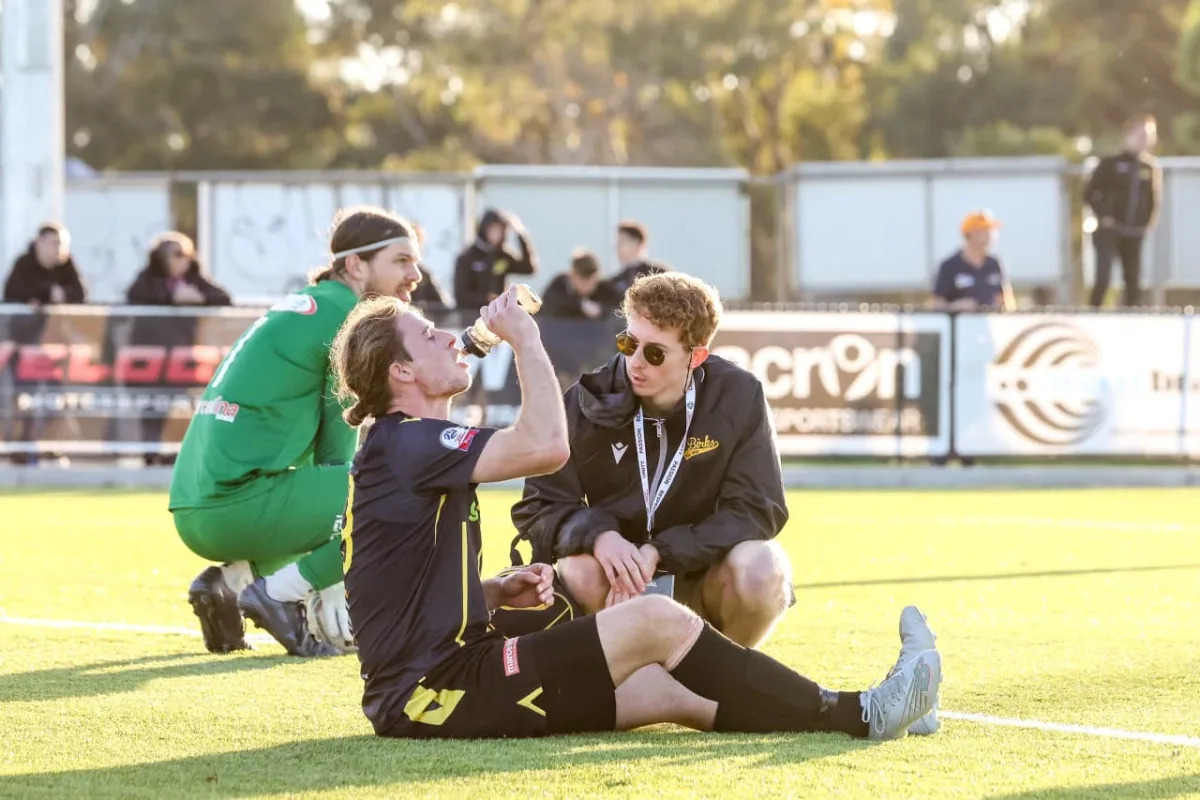
Elite athletes do not return because the calendar says so. They return when they pass the functional criteria. In the Delaware-Oslo ACL cohort, athletes who met simple strength and hop-test criteria before returning to sport had an 84% lower reinjury risk than those who did not (Grindem et al., BJSM 2016). That principle applies to a 50-year-old’s calf strain as much as to a reconstructed knee. Recovery has criteria, and “it feels okay” is not one of them. You can see how we structure it on our recovery and return to sport page.
What This Means at 40, 50 or 60
- Get a baseline. Know your hamstring, adductor, quad and calf strength, side to side, before the season, not after the injury.
- Lift something heavy twice a week. Strength is the tissue property that protects you most and declines fastest when ignored.
- Micro-dose if you need to. Consider smaller micro-doses of strength loading for different tissues, to suit your work, training and lifestyle.
- Never spike. Add training in steps. If you have had a month off, your first week back is not a normal week.
- Keep training through the off-season. A lower, steady load beats stop-start every time.
- Return on criteria, not on dates. Strength within 10% of the other side and pain-free sport-specific tests, then play.
- Re-test. The number is the point. If it has not changed, the program changes.
The Elite Sport Link at Saunders
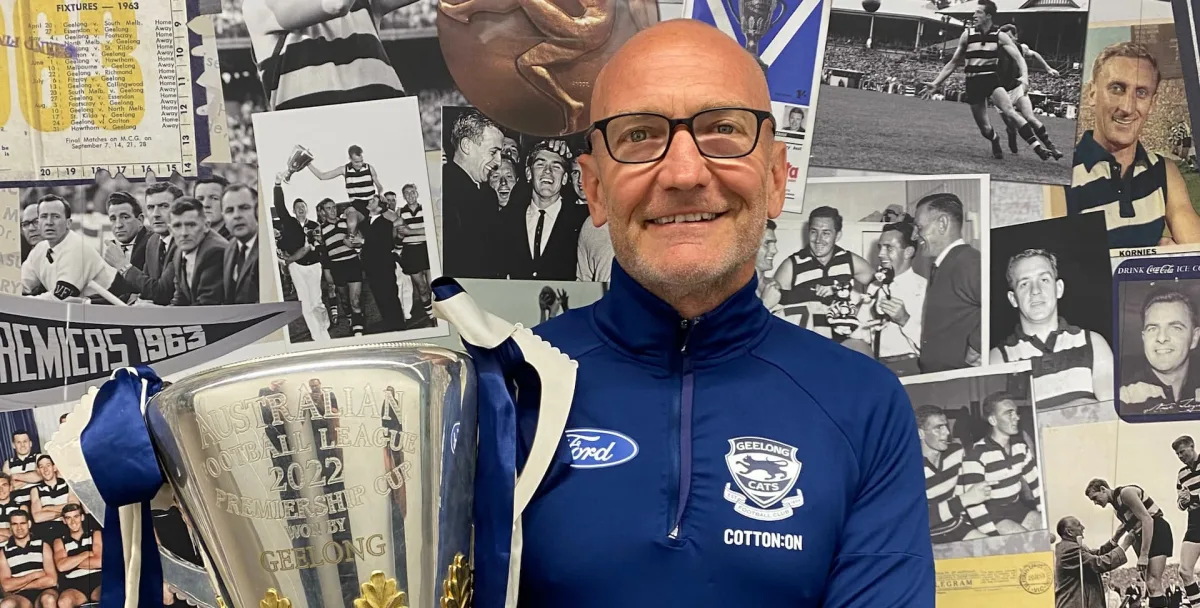
Steve founded KangaTech, the strength-testing system now used by professional clubs in the AFL and overseas (NBA, EPL, MLB, NHL), and he consults on science and medicine to the Geelong Football Club. Every claim we make about that background is listed with its independent source on our research and credentials page.
The point of that background is not the photos on the wall. It is that the standard of assessment used to keep elite players on the park is the standard we apply to a weekend athlete in Adelaide. Many of the people we treat are not professionals. They are people who want to keep playing, keep running and keep up with their kids, and who would rather know where they stand than guess.
Still Dangerous at 36? You Can Be Too.
If you want to know where you stand, book an assessment online (opens in a new tab) at our Adelaide CBD or Edwardstown clinic, or call (08) 8410 5666. KangaTech strength assessments are booked by phone. Bring your sport, your goals and your injury history. We will bring the numbers.
Written by Dr Steve Saunders, Director and APA Physiotherapist at Saunders Physiotherapy.
Sources
- Green B, Bourne MN, van Dyk N, et al. Recalibrating the risk of hamstring strain injury (HSI): a 2020 systematic review and meta-analysis of risk factors for index and recurrent hamstring strain injury in sport. British Journal of Sports Medicine. 2020. PubMed
- Wroblewski AP, Amati F, Smiley MA, et al. Chronic exercise preserves lean muscle mass in masters athletes. The Physician and Sportsmedicine. 2011. PubMed
- Lazarus NR, Harridge SDR. Declining performance of master athletes: silhouettes of the trajectory of healthy human ageing? Journal of Physiology. 2017. PubMed
- Peterson MD, Rhea MR, Sen A, et al. Resistance exercise for muscular strength in older adults: a meta-analysis. Ageing Research Reviews. 2010. PubMed
- Reeves ND, Maganaris CN, Narici MV. Effect of strength training on human patella tendon mechanical properties of older individuals. Journal of Physiology. 2003. PubMed
- Ransom M, Saunders S, Gallo T, et al. Reliability of a portable fixed frame dynamometry system used to test lower limb strength in elite Australian Football League players. Journal of Science and Medicine in Sport. 2020. PubMed
- Gabbett TJ. The training-injury prevention paradox: should athletes be training smarter and harder? British Journal of Sports Medicine. 2016. PubMed
- van Dyk N, Behan FP, Whiteley R. Including the Nordic hamstring exercise in injury prevention programmes halves the rate of hamstring injuries: a systematic review and meta-analysis of 8459 athletes. British Journal of Sports Medicine. 2019. PubMed
- Askling CM, Tengvar M, Thorstensson A. Acute hamstring injuries in Swedish elite football: a prospective randomised controlled clinical trial comparing two rehabilitation protocols. British Journal of Sports Medicine. 2013. PubMed
- Grindem H, Snyder-Mackler L, Moksnes H, et al. Simple decision rules can reduce reinjury risk by 84% after ACL reconstruction: the Delaware-Oslo ACL cohort study. British Journal of Sports Medicine. 2016. PubMed
- Mark Blicavs interview, ABC Sport, 4 September 2026 (ABC Sport on Facebook). Statistic: AFL graphic, 5 September 2026, compiled by Swamp (@sirswampthing).